5 typical challenges in HVAC technology – and how they can be solved
Updated: Feb 7
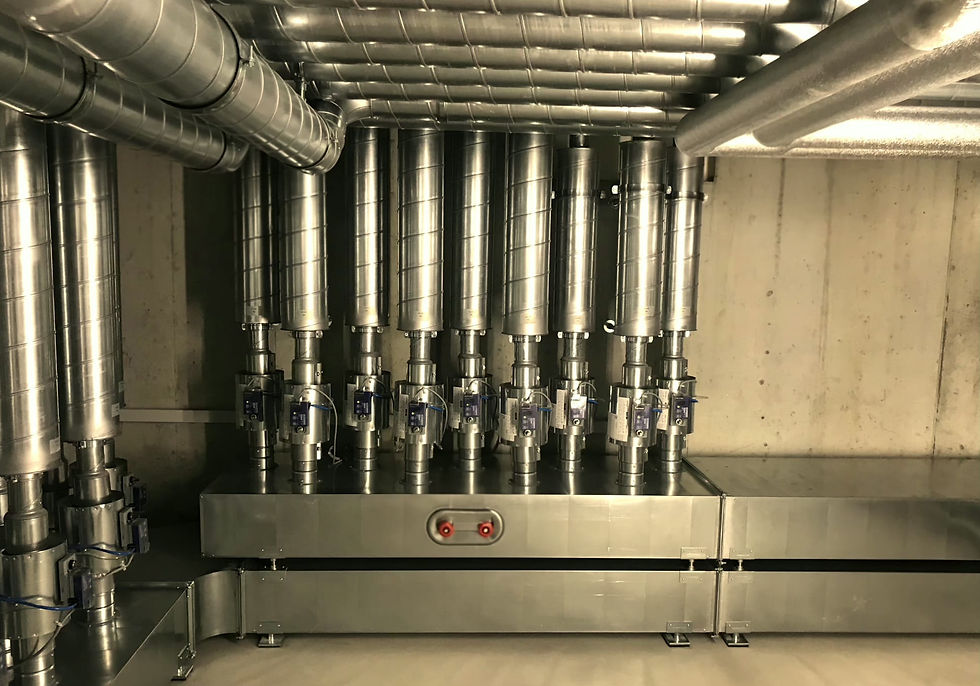
In heating, ventilation, and air conditioning technology, functionality, operational reliability, and efficiency are paramount. However, daily operations constantly present challenges that are difficult or impossible to overcome with standard solutions.
Using five typical situations from HVAC practice, we show how such problems can be solved – with a mix of technical know-how, experience and modern manufacturing methods.
1. Different connection dimensions in existing systems
Especially during renovations or extensions, new components often encounter existing systems with differing dimensions. Different nominal diameters, designs, or connection types frequently lead to complex adjustments.
Typical HVAC solutions:
Transition pieces between different channel shapes
Adapters for different diameters
Special connections for confined spaces
Custom-made components enable clean transitions, reduce assembly time and improve the tightness of the system.
2. Standstill caused by small but crucial components
Often, it is inconspicuous components such as brackets, covers, or guide elements that prevent a system from operating. If these parts are missing or damaged, the entire system comes to a standstill.
Practical solution: Functional spare parts can be specifically reproduced, so that the system can be put back into operation quickly – without the unnecessary replacement of entire assemblies.
3. Retrofitting of sensors and control technology
Modern HVAC systems are becoming increasingly digital. However, retrofits often lack suitable mounting hardware or housings for sensors and control components.
HVAC-related requirements:
secure assembly
Protection against dust and moisture
clean cable routing
Tailor-made solutions ensure professional integration into existing systems.
4. Inadequate airflow and efficiency losses
Poor airflow can lead to noise, pressure losses, or inefficient operation. Flow problems are particularly likely to occur when modifications are made later.
By making targeted adjustments to air deflectors, distributors or transitions, it is possible to:
improve airflow
Reduce noise levels
increase overall plant efficiency
5. Maintenance and service under real-world conditions
In day-to-day service operations, fast, reliable solutions are essential. While improvisations are sometimes necessary, they shouldn't be permanent.
Through well-thought-out, practical adjustments:
Maintenance work simplified
Repairs implemented more sustainably
Service operations can be made more efficient
Conclusion
Challenges in HVAC technology usually arise from individual site conditions. Standard solutions quickly reach their limits in these situations.
The key lies in combining HVAC expertise with flexible solutions . This allows systems to be operated reliably, optimized efficiently, and maintained sustainably – without unnecessary compromises.

